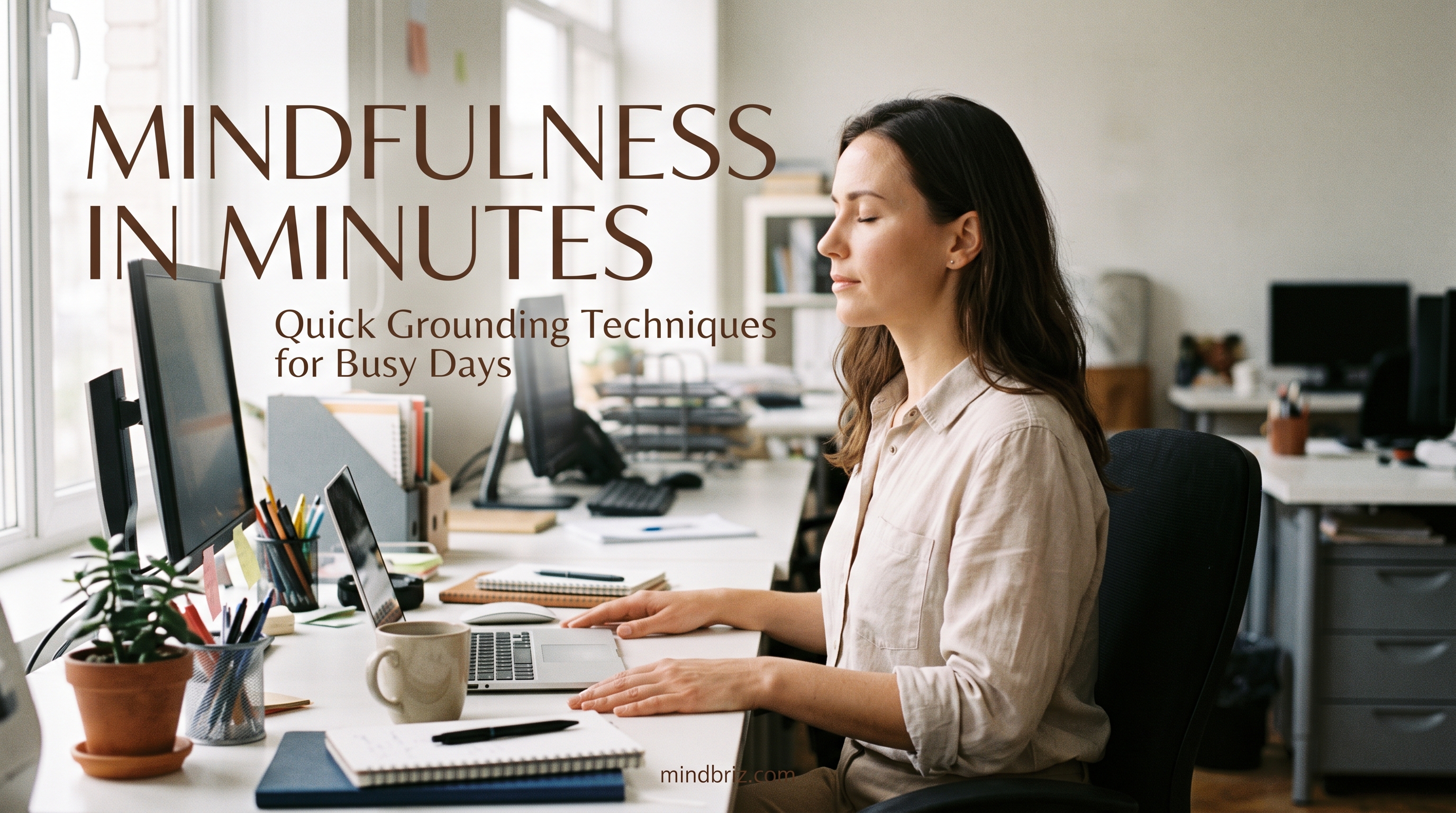
5 Surprising Daily Habits That Are Secretly Spiking Your Anxiety
We usually blame anxiety on the big things: a looming project deadline, financial stress, or a major life transition. But more often than not, the low-level hum of anxiety that follows you through the day isn't caused by a massive crisis. It is built by small, seemingly harmless micro-habits repeated without thinking.
By The Mindbriz Team

If you are feeling perpetually on edge, you might be accidentally fueling your own stress loop. Here are five everyday mistakes that are quietly sending your nervous system into overdrive.
1. Treating Coffee Like Hydration
A morning cup of coffee is a ritual, but sipping it continuously until 3 PM is a chemical trigger for panic. Caffeine stimulates the central nervous system, prompting the release of adrenaline. When consumed in excess, it mimics the exact physical symptoms of a panic attack: a racing heart, shallow breathing, and jittery hands.
Your brain registers these physical sensations and assumes there must be a threat nearby, creating psychological anxiety out of thin air. Try swapping your afternoon brew for a decaf alternative or a glass of cold water.
2. The Doomscrolling Trap
You sit down to unwind, open your phone, and suddenly it is an hour later and you have consumed a barrage of political outrage, natural disasters, and polarizing debates.
The human brain is evolutionarily wired to scan for threats, meaning negative news holds our attention far longer than positive news. Doomscrolling forces your brain to process a constant stream of global crises that you have zero control over, keeping your amygdala (the brain's fear center) on high alert.
3. Sabotaging Your Sleep Hygiene
It is easy to underestimate the link between a messy sleep routine and daytime anxiety. Using bright screens in bed suppresses melatonin production, delaying your sleep onset. Waking up at 6 AM on weekdays and sleeping in until 11 AM on weekends creates "social jet lag," confusing your circadian rhythm.
When you are chronically under-rested, your brain struggles to regulate emotions. Minor inconveniences—like a slow Wi-Fi connection or a passive-aggressive email—suddenly feel like insurmountable catastrophes. Lock in a consistent wake time and banish glowing screens from the bedroom.
4. Leaving Notifications on "All"
Every ping, buzz, and banner notification demands immediate cognitive attention. If your phone alerts you for every promotional email, social media like, and group chat message, you are subjecting yourself to dozens of micro-interruptions a day.
This constant task-switching fractures your focus and spikes cortisol levels. Take back control of your attention by muting all non-essential notifications. If it isn't a direct message from a human being or a calendar reminder, it doesn't need to vibrate.
5. "Screen Apnea" and Shallow Breathing
Pay attention to how you are breathing right now. If you are hunched over a keyboard or staring at a phone, you are likely taking shallow, short breaths from your chest—or even subconsciously holding your breath.
This phenomenon, dubbed "screen apnea," signals to your body that you are bracing for impact. Shallow chest breathing activates the sympathetic nervous system (fight-or-flight). Simply shifting your posture and taking slow, deep breaths into your belly can manually engage the parasympathetic nervous system, signaling to your brain that you are safe.
Small adjustments to these daily defaults can dramatically lower your baseline stress. You do not need to overhaul your entire life overnight—pick one habit to tweak today, and give your nervous system a chance to reset.
Join Mindbriz Waitlist- Mindbriz — AI wellbeing companion, coming soon to iOS & Android